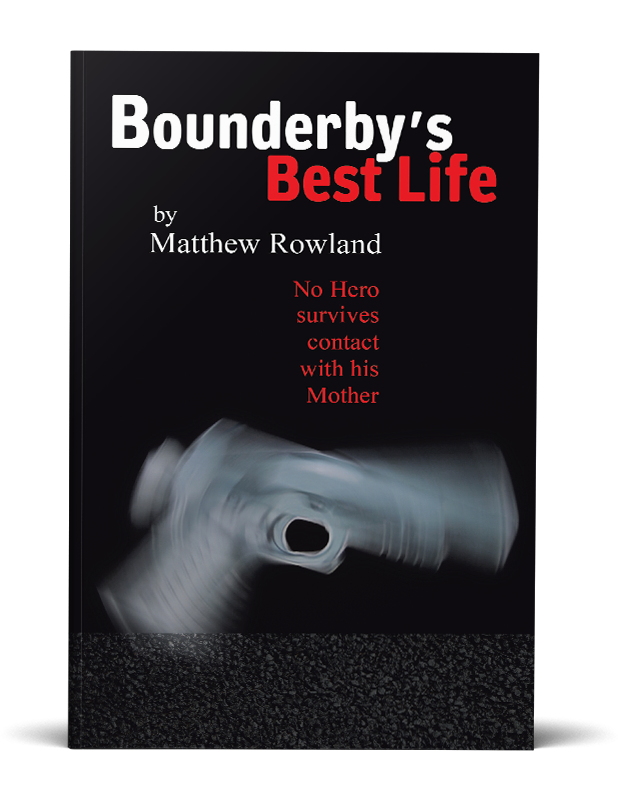
Junie Bounderby has spent his life believing he deserves more—more success, more recognition, more of the wealth and status enjoyed by the rest of his powerful family. As a brutal polar vortex grips the suburbs on the longest night of the year, Junie slips out of bed and into the darkness on a secret mission he believes will finally secure the future he was always meant to have.
But the road through his wealthy hometown is lined with old grudges, family betrayals, simmering resentments, and uncomfortable truths he can no longer outrun.
Darkly funny, psychologically incisive, and unsettlingly timely, Bounderby’s Best Life is a biting portrait of modern privilege, self-delusion, and the cost of believing your best life is something owed to you.
READ AN EXCERPT ORDER A COPY NOW
Reviews
KIRKUS REVIEWS
A disfavored son launches a mission of reinvention in Rowland’s debut literary novel.
Junior “Junie” Bounderby is still seething over the fact that his older brother was able to buy the house next door to their parents’ place years ago. (His brother’s offer was selected over Junie’s equally legitimate offer—in part, he suspects, because their father intervened.) The multimillion-dollar houses are on Grandview, the town’s finest boulevard, and Junie has never been able to catch up to his family members’ level of wealth. Junie lives with his wife and two teenage children further down the hill in a less impressive house (on which Junie has barely been able to keep up the payments, due to a downturn in his small business). But Junie is a man of action. His motto is BFF, which in his idiolect stands for Best Foot Forward. “BFF means what Junie Bounderby says it means,” he tells his son, Trip, when the latter attempts to convince him the acronym already has universally acknowledged meaning. “That’s how my family operates. Putting our best foot forward is table stakes for us. We don’t have best friends. We don’t need best friends. Who needs best friends when we have our best feet? Best feet that we always put forward?” When his widowed mother goes to Florida for the winter, leaving her house empty, Junie picks the winter solstice—during a polar vortex, to boot—to sneak into the house in the middle of the night and plant something in his dead father’s office that will finally, he believes, make him whole. The only problem? A mysterious figure attacks him in the dark house. Junie kills the assailant in self-defense, then flees without knowing who it is. Is Bounderby’s new life plan ruined before it’s begun? Or can he BFF his way through fraud, murder, adultery, and more to be the best Bounderby yet?
Rowland writes from deep within Junie’s consciousness, more or less in real time. Junie spends the first eight pages of the novel trying to slip out of bed without waking his wife, and 15 pages walking to his mother’s house (with a brief detour to attempt to remove some offensive lawn jockeys from a neighbor’s front drive). This decompression of narrative time, along with Rowland’s habit of holding back orienting bits of information about Junie’s life and intentions, makes for a reading experience that is simultaneously humorous and suspenseful. The maximalist precision of the prose creates a rich and ridiculous texture, as here when Junie trips over something soon after entering his mother’s darkened house: “The chaos of all his mother’s unexpected detritus underfoot was dominoing him toward a mission-critical fall. But then somehow his windmilling arms met a droopy clothesline which provided enough resistance to keep him upright until this near downfall was prevented by a soft landing on the washing machine.” Bad decisions lead to worse ones and eventually to more violence. While readers may never really root for Junie, they’ll be happy to follow his every move.
A compulsive, comic, claustrophobic novel about resentment and ambition.